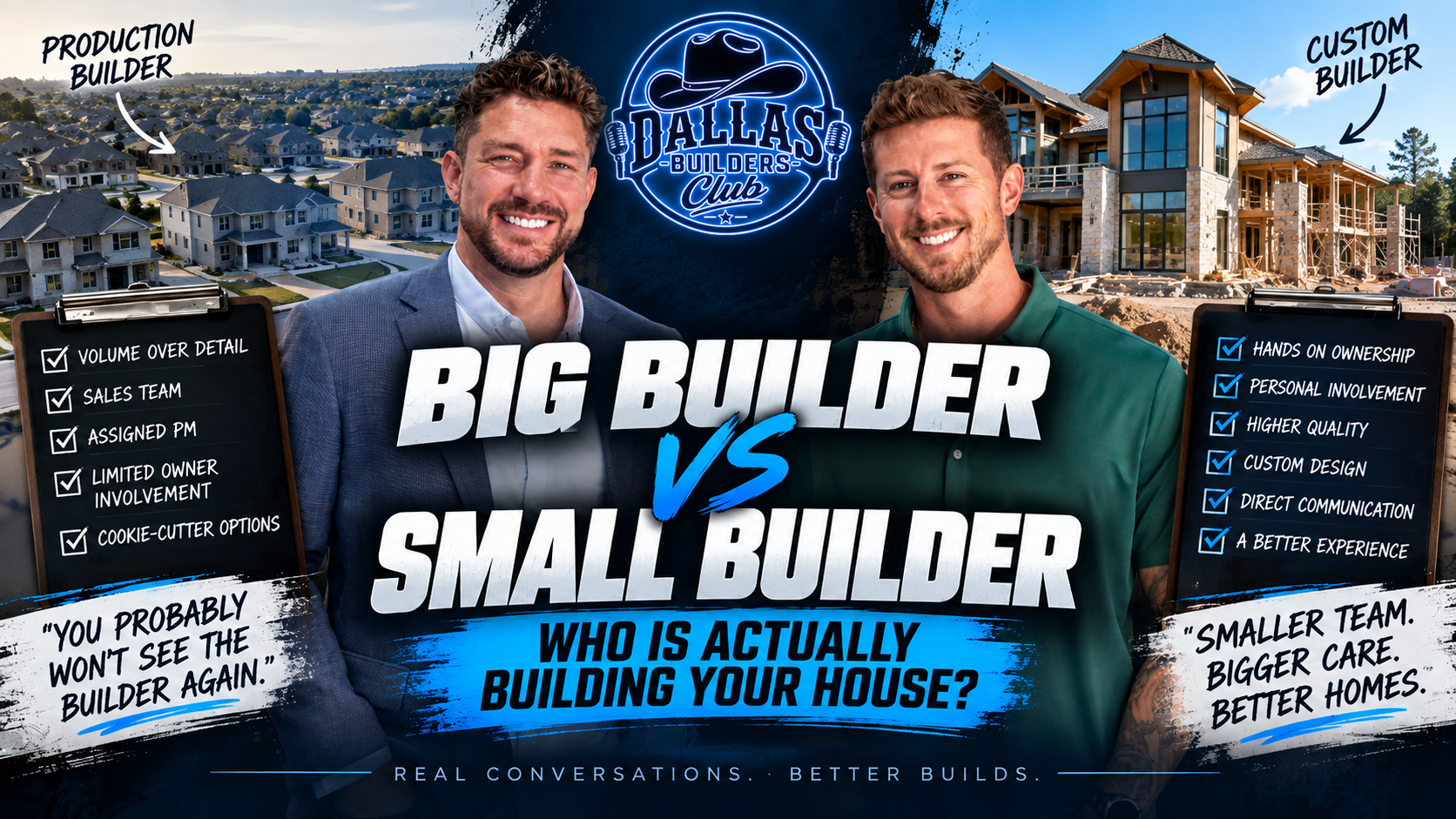
The Name on the Sign vs. the Person on the Site
When homeowners choose a custom builder, they often focus on the company name, portfolio, reputation and price. There is another question that can have an enormous effect on the experience: Who will actually be involved in building the house?
Large and small builders can both produce exceptional homes. The difference is often organizational structure. With a larger company, a homeowner may meet the owner or principal during sales and then work primarily with an assigned project manager and designer. A smaller custom builder may keep the ownership team much closer to design decisions, job-site quality control, budgeting and problem solving.
Neither model is automatically better. What matters is knowing which model you are buying.
Why Owner Involvement Can Matter
Luxury custom homes contain thousands of decisions. Plans evolve, field conditions create questions, designers refine details and homeowners make changes as they see spaces take shape.
When the builder’s principals remain involved, decisions can benefit from people who have both financial responsibility for the project and a personal stake in the company’s finished product. An owner may notice a design opportunity in the field, question an invoice, catch a quality issue or make an adjustment before a small problem becomes expensive.
For boutique builders, that hands-on involvement can become part of the product itself.
The Strengths of a Larger Builder
Large builders can offer advantages as well. More employees can mean dedicated departments, standardized processes, purchasing power, established design systems and multiple layers of project support.
The important issue is continuity. Homeowners should understand who their project manager will be, how long that person has been with the company, who steps in if staffing changes, and how information moves between the field, office, designer and client.
A great system can make a large organization extremely effective. A weak handoff can make a homeowner feel disconnected from the person whose name originally earned their trust.
Quality Control Requires Field Presence
Regardless of company size, somebody with authority needs to know what is happening on the job.
Quality control cannot exist entirely inside email, accounting software or weekly reports. Builders need field verification. They need to know whether work is complete before invoices are approved, whether materials were damaged, whether punch items were corrected and whether what was installed matches the plans and selections.
That is particularly important in luxury construction, where a seemingly small field decision can affect cabinetry, lighting, mechanical systems, finishes and architectural details downstream.
Questions to Ask Before Hiring a Custom Builder
Instead of asking only, “How many houses do you build?” ask questions that reveal how the company actually operates.
Who will be my primary contact? How often is the owner involved? Who performs quality-control walks? Who approves invoices? What happens if my project manager leaves? How are design changes communicated to the field? Who has authority to make a decision when a problem is discovered on site?
The answers tell you far more about the future building experience than company size alone.
Choose the Operating Model That Fits You
Some homeowners want a highly structured organization with dedicated departments. Others want direct access to the people who own the building company and prefer a more boutique, collaborative process.
The best fit depends on the project and the client.
For a luxury custom home in Dallas-Fort Worth, buyers should evaluate the builder’s portfolio, financial controls, communication process, trade relationships and quality standards—but they should also understand exactly who will be standing in their house when an important decision needs to be made.
The company name may be on the sign. The people actually managing the details are the ones who will shape the experience.
About Dallas Builders Club
Dallas Builders Club shares real-world conversations about custom home building, construction management, real estate development and the business behind building luxury homes in Dallas-Fort Worth.
Instagram: @the_dallas_builders_club | @DFWCUSTOMHOMEBUILDER